
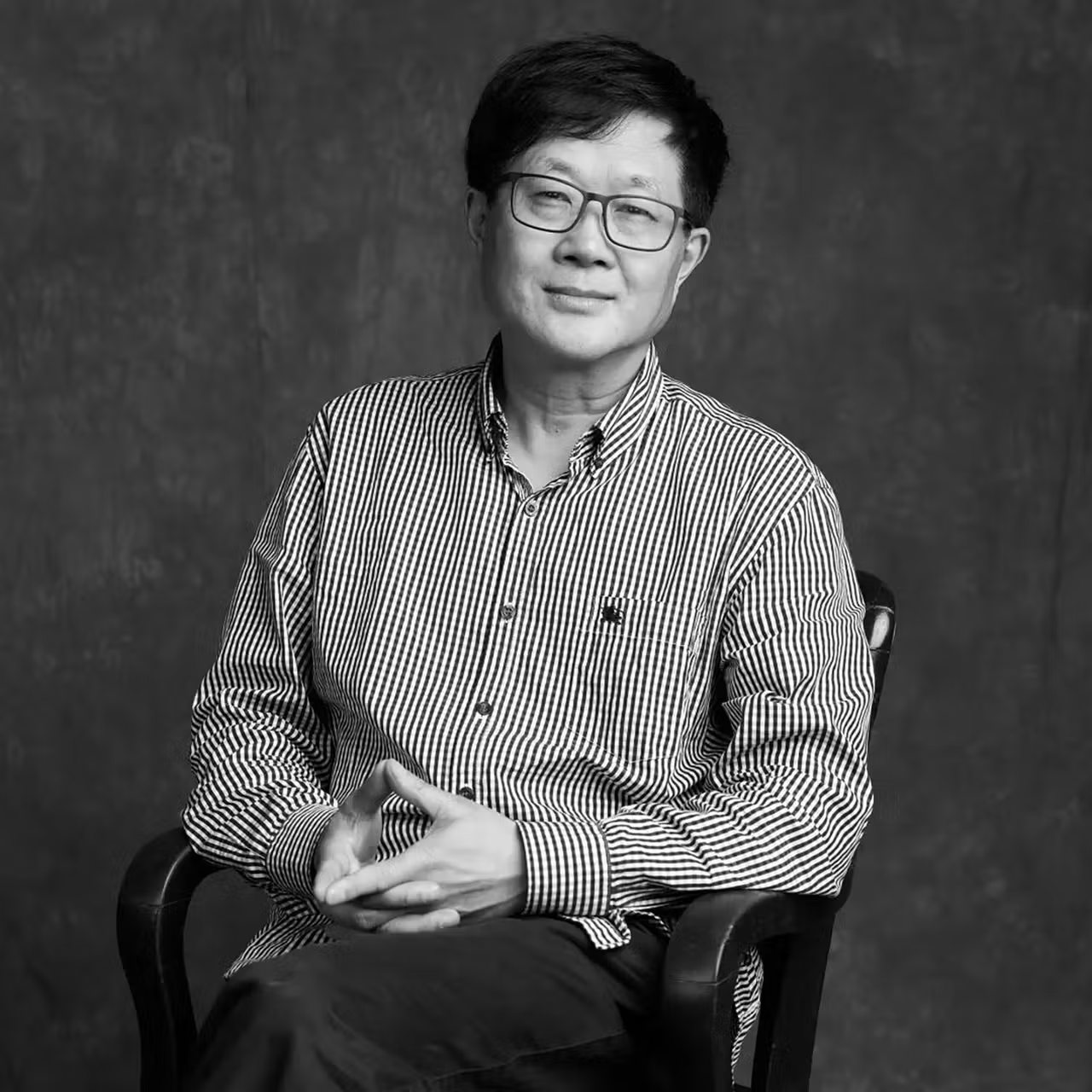
A contemporary art critic and historian, Lü Peng faces – on an international scale – the most vibrant and interesting phenomena, especially those that constitute the common thread of change. Because that’s what art is all about (and he knows it well): it changes, and never subjected to evolution. Wherever change goes, it must be recognized and also investigated, as this well-known Chinese essayist does. For him, investigation is not abstract or based on preconceived theorems. Indeed, Peng (a professor at the Macau University of Science and Technology and the Sichuan Fine Arts Institute, and a former associate at the Chinese Academy of Fine Arts in Hangzhou) investigates the facts, what’s happening, and therefore the art being produced. In this, he also benefits from his observatory as director of the artistic committee of the Chengdu Museum of Contemporary Art.
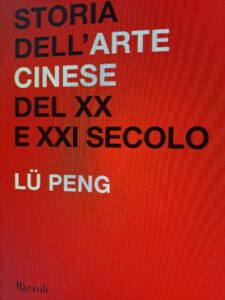
Thus, the chosen geographical setting is China, a vast and creative region worthy of these 1,200 pages, divided into two volumes, published by Rizzoli and coordinated by Manuela Schiavano. The first edition was the Chinese one from 2006, followed by others in English and French. Now, here is this tasteful and elegant box set with the refined layout by Gardel&Gardel. The subtitle precisely highlights the chosen time frame: from the end of the 19th century to 1978. This latter date is no coincidence. As one can read, it marks the beginning of a policy of reform and openness for Chinese art, even if there is still interference from Western art. But the second volume focuses on Chinese art from the second half of the century to recent years. And here Peng masterfully delves into the eminently Chinese artistic production. It is here that the scholar also makes a highly effective methodological contribution, establishing clarity and offering interpretative keys while respecting an inextricably diverse world. As Ornella De Nigris, a researcher in Chinese studies at the University of Siena, points out in her preface to the Italian edition (she is also the translater), “the author therefore aims to give voice to the dynamism and vivacity that have characterized this tension between tradition and modernity, in which artists have tirelessly sought to adapt to the country’s historical, political, and cultural vicissitudes.”
A keystone of sorts is provided by chapter 15. In it, Peng discusses “The Formation of the Contemporary Art System in the 21st Century.” And he immediately points to a pivotal moment: “Since 2000, in the art world, as in the country as a whole, changes have proceeded along two different trajectories. On one side, there was the inertia of state planning and ideological control, in which artists continued to enjoy salaries and benefits (…) on the other, there was the private sector. Since private exhibition spaces offered greater opportunities for experimentation, it is possible to say that the revolution in contemporary Chinese art actually stemmed from the development of the market economy” (pp. 729-730).
The images are appropriately numerous, but carefully chosen for their illustrative value. At a time when China is a central country in global balances and in the reorganization of geopolitics and geoculture (Peng weaves a beautiful narrative around this second concept), this book – sometimes indirectly, sometimes directly – is a very useful and, in my opinion, essential reading (or studying, as the case may be) because it immerses you in the major themes and intricacies of the fragmentation (albeit well-organized) of the greater Chinese reality, encompassing society, culture, and ever-evolving existential and economic perspectives. For those unfamiliar with the Chinese world in its entirety and complexity—be they intellectuals, politicians, economists, or simply curious people – you must take in account that this “History of Chinese Art” manages to go beyond art and culture. Peng – who knows the Western world well – almost seems to emulate Arnold Hauser as the author of “The Social History of Art” which would become a major reference, but which first appeared in English in 1951.
_____________________________
LA CINA SI FA SENTIRE ANCHE CON L’ARTE
Critico e storico dell’arte contemporanea, Lü Peng ha speciale dimestichezza su scala internazionale con i fenomeni più vivaci e interessanti, quelli cioè che costituiscono il filo rosso del cambiamento. Perché di questo si tratta in arte (e lui lo sa bene): di cambiamento, e mai di evoluzione. Dovunque vada il cambiamento, questo va conosciuto e – se è il caso, come fa questo ben noto saggista cinese – indagato. Per lui l‘indagine non è astratta o basata su teoremi precostituiti. Infatti, Peng (professore alla Macau University of science and Technology e al Sichuan Fine Arts Institute, e già associato alla Chinese Academy of Fine Arts, a Hangzhou) fonda la sua perlustrazione sui fatti, su ciò che accade, e quindi sull’arte che si va producendo. In questo si giova anche del suo osservatorio di direttore del comitato artistico del Museo d’Arte Contemporanea di Chengdu. Dunque, il terreno geografico privilegiato è la Cina, area geografica immensa e ricca di creatività da meritare queste 1200 pagine complessive suddivise in due volumi, per Rizzoli, col coordinamento di Manuela Schiavano. La prima edizione è quella cinese del 2006, seguita da altre in inglese e in francese. Ora, ecco questo gustoso ed elegante cofanetto con la raffinatissima impaginazione di Gardel&Gardel. Il sottotitolo sottolinea con esattezza l’arco temporale di elezione: dalla fine del XIX secolo al 1978. Quest’ultima data non è casuale. Come si legge, essa è l’inizio di una politica di riforme e di apertura per l’arte cinese, anche se c’è ancora l’interferenza dell’arte occidentale. Ma il secondo volume si fissa sull’arte cinese a partire dalla seconda parte del secolo fino ad anni recenti. E qui magistralmente Peng fa un bell’affondo sulla produzione artistica eminentemente cinese. Ed è qui che lo studioso dà anche un contributo metodologico efficacissimo perché mette ordine e offre chiavi di lettura pur rispettando un mondo inestricabilmente variegato. Come precisa Ornella De Nigris, ricercatrice in studi cinesi all’università di Siena, nella prefazione all’edizione italiana (la traduzione è sua),”l’autore si propone perciò di dare voce alla dinamicità e alla vivacità che hanno caratterizzato questa tensione fra tradizione e modernità, in cui gli artisti hanno instancabilmente cercato di adattarsi alle vicissitudini storiche, politiche e culturali del Paese”.
Una sorta di chiave di volta è data dal capitolo 15. Peng vi tratta “La formazione del sistema dell’arte contemporanea nel XXI secolo”. E indica subito un momento-cerniera: “Dal 2000, nel mondo dell’arte come in tutto il Paese nel suo complesso, i cambiamenti procedevano lungo due traiettorie diverse. Da una parte c’era l’inerzia della pianificazione statale e del controllo ideologico, in cui gli artisti continuavano a godere di salari e benefici (…) dall’altra c’era il settore privato. Poiché gli spazi espositivi privati offrivano maggiori margini di sperimentazione è possibile affermare che la rivoluzione dell’arte contemporanea cinese sia effettivamente derivata dallo sviluppo dell’economia di mercato” (pp.729-730).
Opportunamente numerose le immagini ma scelte con grande attenzione al loro valore esemplificativo degli assunti esposti. In tempi in cui la Cina è Paese centrale negli equilibri mondiali e nel riassestamento della geopolitica e della geocultura (intorno a questo secondo concetto Peng tesse una bella trama), questo libro – a volte indirettamente, a volte direttamente – costituisce una lettura (o uno studio, a seconda dei casi) utilissima e a mio avviso imprescindibile perché ti immette nei grandi temi e nei meandri della parcellizzazione (che c’è anche se ben organizzata) della grande realtà cinese, tra società, cultura, e sempre nuove prospettive esistenziali ed economiche. Per chi non avesse familiarità col mondo sinologico nel suo complesso e nella sua complessità – si tratti di intellettuali, politici, economisti, o di normale curiosità) – sappia che questa “Storia dell’arte cinese” riesce ad andare anche oltre l’arte e la cultura. Peng – che conosce bene il mondo occidentale – sembra quasi un emulo di Arnold Hauser, la cui opera “The Social History of Art” diventerà un grande riferimento ma che appare per la prima volta in inglese nel 1951.